

If you speak to facilities managers in 2026, you’ll hear a familiar theme come up again and again.
Not just about budgets.
Not just about staffing.
But about complexity.
Cleaning standards haven’t necessarily become harder to achieve, but the systems, products, and processes used to achieve them often have.
And that raises a very simple question:
Have we made cleaning more complicated than it needs to be?
The Reality FM Teams Are Working In Right Now in 2026
Facilities management teams are under pressure from multiple directions:
- Higher expectations around visible cleanliness and hygiene assurance
- Increased focus on sustainability and ESG
- More frequent audits and compliance checks
- Ongoing staffing challenges and turnover
- Cost control demands across every consumable category
Individually, none of these are new.
But together in 2026, they’re creating something different:
a system that is harder to control consistently.

Where Complexity Starts to Create Problems
Over time, cleaning systems tend to grow organically:
- A product added for a specific stain or task
- Another chemical introduced for “better performance”
- A different dilution process for different environments
- Separate protocols across sites or contractors
On paper, each addition makes sense.
But in practice, it creates dependency on:
- training quality
- staff experience
- correct product selection
- perfect execution under time pressure
And that’s where inconsistency starts to creep in.
Because in real FM environments, perfection is not the baseline—it’s the exception.
The Hidden Issue: Inconsistency, Not Capability
One of the biggest misconceptions in facilities cleaning is this:
If the right products are in place, the result will always be the same.
In reality, outcomes vary because execution varies.
That leads to:
- uneven cleaning standards across sites
- overuse of chemicals “just to be safe”
- higher consumable costs
- difficulty proving consistency during audits
And in 2026, where many FM teams are being asked to demonstrate performance rather than just deliver it, that becomes a real operational challenge.

Why This Is Becoming More Visible in 2026
There’s a shift happening in how FM performance is being assessed.
It’s no longer just:
- “Is it clean?”
It’s becoming:
- “How consistently is it clean?”
- “How do you prove it?”
- “What’s the environmental impact of how you clean?”
That combination is forcing a rethink of traditional cleaning models.
Because systems that rely heavily on manual decisions and multiple chemical inputs are harder to standardise at scale.
The Case for Simpler Cleaning Systems
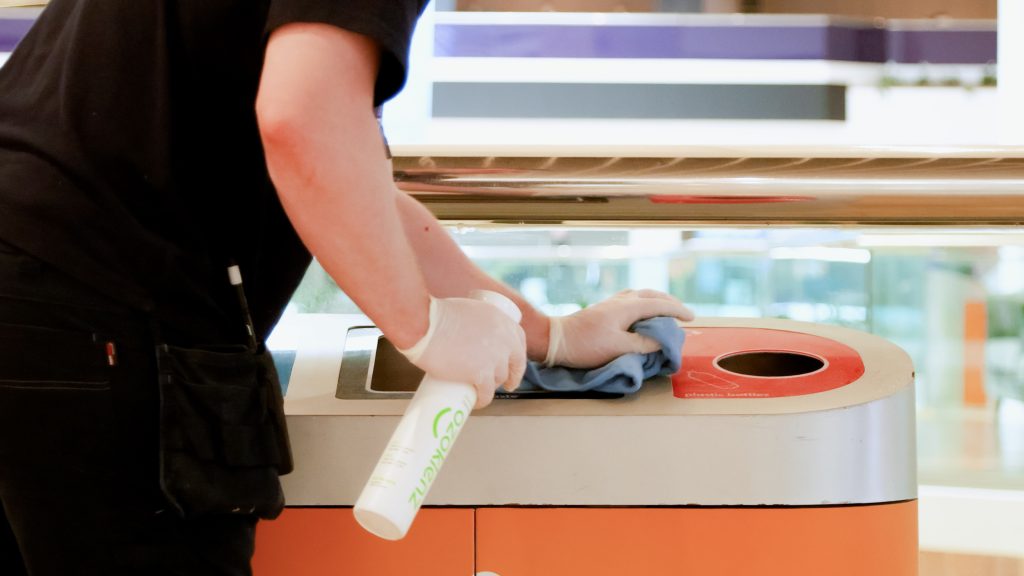
This is where chemical-free cleaning systems are increasingly being considered—not as a niche alternative, but as an operational simplification strategy.
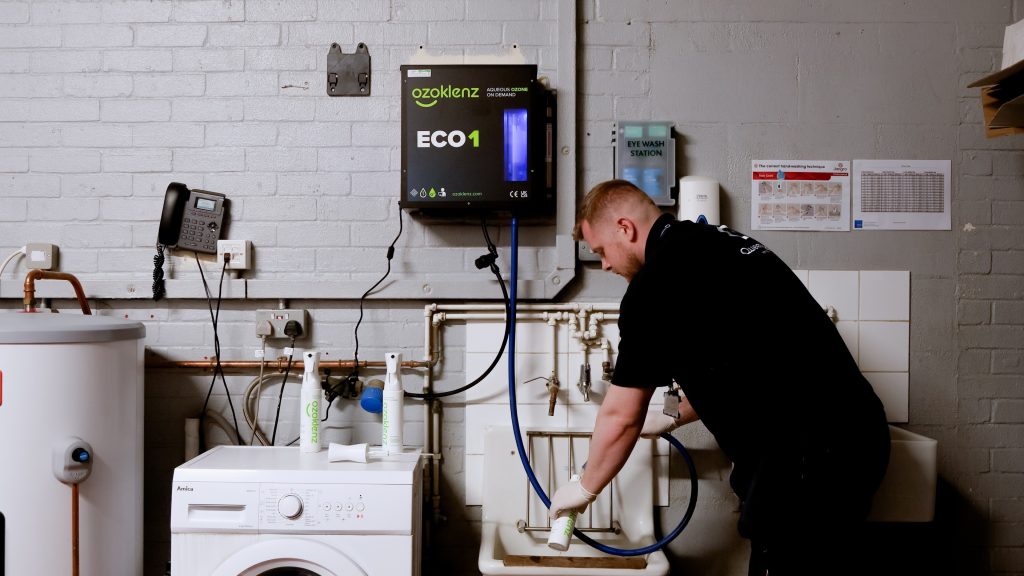
Systems such as aqueous ozone cleaning generate a cleaning and sanitising solution on-site using water, oxygen, and electricity, removing the need for traditional chemical products in daily cleaning operations.
From a facilities management perspective, that changes the model.
Instead of:
- multiple products
- multiple dilution steps
- multiple training requirements
You move towards:
- a single consistent solution
- reduced handling and training complexity
- less variation between users and sites
What FM Teams Actually Gain From Simplification
When cleaning systems become less complex, the benefits show up operationally:
1. Greater consistency across teams
Less variation in how cleaning is delivered.
2. Reduced training burden
Especially important in high turnover environments.
3. Lower risk of misuse
Fewer chemicals means fewer handling and dilution errors.
4. Easier audit performance
More predictable outcomes across sites.
5. Alignment with sustainability goals
Reduced reliance on bottled chemical products and supply chains.
This Isn’t About Removing Standards… It’s About Removing Noise
There’s a misconception that simplifying cleaning means lowering expectations.
It doesn’t.
If anything, FM standards in 2026 are higher than ever.
The difference is that more teams are recognising that:
complexity does not equal quality.
In fact, too much complexity often works against consistency.
Where Ozoklenz Fits Into This Shift
Ozoklenz is designed around a simple principle:
reduce operational complexity in cleaning without compromising hygiene outcomes.
By generating aqueous ozone on demand, it removes the need for multiple chemical products in daily cleaning processes, helping FM teams standardise how cleaning is delivered across sites.
Not only does it give you a truly sustainable system, it also supports your team in reducing operational inefficiencies.
Final Thought
In 2026, facilities management isn’t short on standards.
It’s short on simplicity.
And as expectations continue to rise, the question isn’t just whether cleaning is effective.
It’s whether the systems behind it are helping or hindering consistency.
Because sometimes, the biggest improvement doesn’t come from adding more.
It comes from taking complexity away.
