


Norovirus outbreaks can be particularly disruptive in schools, where pupils and staff share classrooms, toilets and other communal spaces throughout the day. Understanding how to manage norovirus in schools and having the right cleaning procedures in place can help reduce the risk of infection spreading.
For cleaning and facilities teams, preparation makes a real difference. Knowing which areas need attention, how to respond to an outbreak and what equipment to have ready can help maintain hygiene standards and make the response more manageable.
So, what does good norovirus cleaning actually look like? And how can schools make everyday cleaning more effective?
Why does norovirus spread so easily in schools?
Norovirus, often called the winter vomiting bug, is highly infectious. It spreads through contact with an infected person, contaminated surfaces and objects, or food handled by someone carrying the virus.
Children can pass on norovirus before symptoms appear and after they have stopped. Symptoms usually develop between 12 and 48 hours after infection.
In a school environment, where hundreds of people regularly use the same toilets, touch the same door handles and share equipment, there are plenty of opportunities for the virus to spread.
It’s also worth keeping an eye on the latest figures. UKHSA’s national report published on 5 November 2026 recorded 1,958 positive norovirus laboratory reports in England so far this season. That’s 18.2% above the five-season average for the same period.
Although recent activity has remained stable and within expected levels, norovirus is something schools should be prepared for as the colder months approach.
Start with good handwashing
Handwashing is one of the simplest and most important ways to help prevent norovirus spreading.
The NHS and Department for Education both recommend washing hands thoroughly with soap and warm water. Alcohol-based hand gels are not effective against norovirus, so they should never be used as a replacement for proper handwashing.
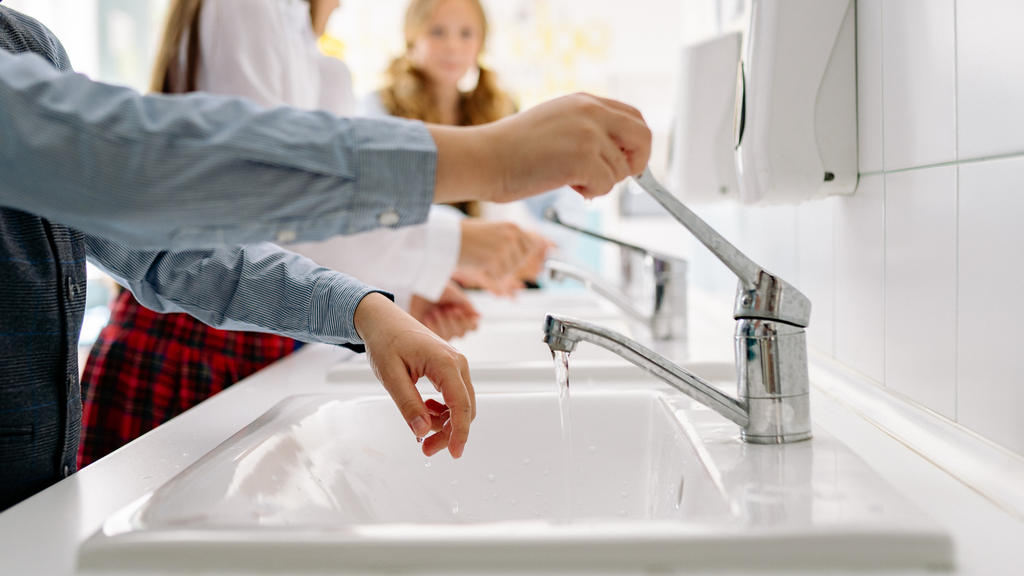
For school cleaning teams, this means making sure every washroom has the essentials:
- Fully stocked liquid soap dispensers.
- Access to warm running water.
- Paper towels that are regularly replenished.
- Bins that are emptied and kept clean.
Hand gel can still be provided as an additional hygiene measure, but it shouldn’t be the only option available.
It’s equally important that cleaning staff follow good hand hygiene, particularly after dealing with contaminated surfaces or cleaning up vomit and diarrhoea.
What should everyday school cleaning cover?
Good cleaning habits are important throughout the year, not just when an outbreak occurs.
The Department for Education recommends regular cleaning of shared spaces, equipment and frequently touched surfaces. For everyday cleaning, warm water and detergent are normally sufficient to remove most germs that can cause infection.
Areas that deserve particular attention include:
- Toilet seats, flush handles and surrounding surfaces.
- Wash basins and taps.
- Door handles, push plates and light switches.
- Stair handrails and other shared touchpoints.
- Shared equipment, including phones, keyboards and classroom resources.
- Kitchen surfaces and food preparation areas.
A few simple habits can help keep standards consistent.
Stick to a schedule. Make sure toilets, washrooms and frequently touched surfaces are cleaned at planned intervals throughout the day.
Don’t overlook the smaller details. Handles, switches and taps can be easy to miss, but they are touched repeatedly by pupils and staff.
Keep cleaning records. A simple checklist helps teams keep track of completed tasks and identify anything that has been missed.
Plan for busy periods. Cleaning routines need to remain consistent even when staff are stretched or absence levels are higher than usual.
What changes when there is a norovirus outbreak?
When norovirus is suspected or confirmed, everyday cleaning routines need to be stepped up.
Current UKHSA and Department for Education guidance recommends more frequent cleaning of shared areas, particularly kitchens and toilets, using a bleach-based cleaning product where possible.
The right approach will depend on the setting and advice from the local health protection team, but there are several important principles to follow.
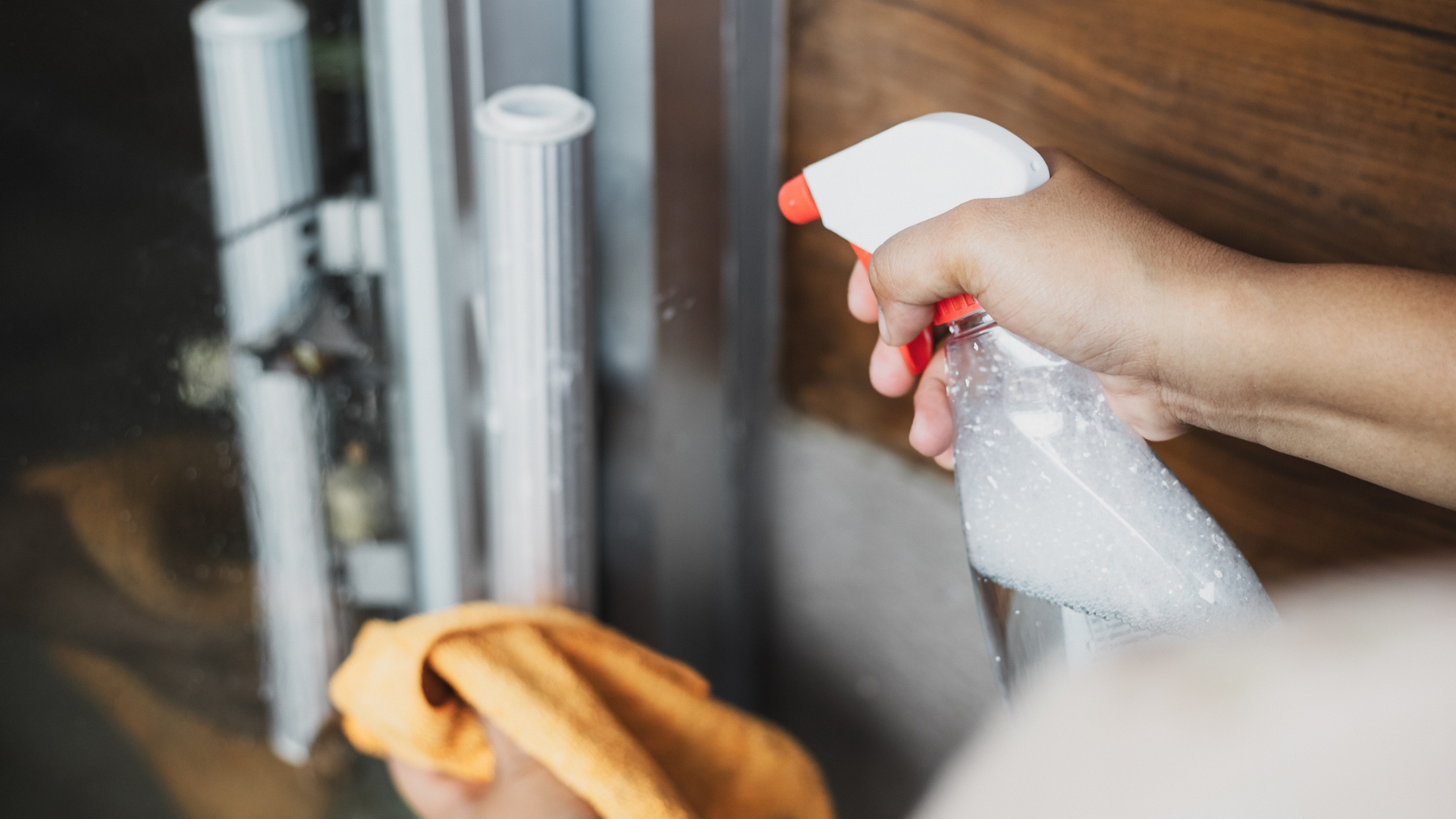
1. Clean before disinfecting.
Surfaces must be thoroughly cleaned to remove visible contamination before applying a disinfectant. Disinfection is less effective if dirt and organic matter remain on the surface.
2. Use an appropriate disinfectant.
Chlorine-based disinfectants are commonly recommended for norovirus outbreaks. A typical recommendation is 1,000ppm (0.1%) available chlorine. Always follow the relevant public health guidance and the manufacturer’s instructions for dilution and contact time.
There are also chemical-free alternatives worth considering. Later in this guide, we look at how aqueous ozone cleaning, such as Ozoklenz, can support routine school cleaning without relying on traditional chemical cleaning products.
3. Increase cleaning frequency.
Toilets, washrooms and frequently touched surfaces may need cleaning several times throughout the day. Follow the frequency set out in your local outbreak plan.
4. Pay attention to soft furnishings.
Carpets and upholstered surfaces need different treatment from hard surfaces. Follow the appropriate guidance for the material and cleaning method.
5. Keep cleaning equipment separate.
Use dedicated equipment for different areas, particularly kitchens and washrooms. Disposable cloths and colour-coded cleaning equipment can help reduce the risk of transferring contamination between areas.
6. Complete a thorough clean afterwards.
Once the outbreak has ended, a terminal clean should be carried out in line with the advice provided by the relevant health protection team.
Staff and pupils who have experienced vomiting or diarrhoea should also stay away from school until at least 48 hours after their symptoms have stopped.
Schools should contact their local health protection team where specialist advice is needed, particularly where there are linked cases or an unusually high or rapidly increasing number of absences.
How should a vomit or diarrhoea spill be cleaned up?
Cleaning up bodily fluids is one of the most important parts of managing a norovirus outbreak. It needs to be handled promptly and carefully to reduce the risk of spreading contamination.
Cleaning teams should have a clear procedure to follow, with the right equipment readily available.
A suitable procedure includes:
- Secure the area. Keep pupils and other staff away from the affected area and ventilate the space where possible.
- Wear appropriate PPE. Put on disposable gloves and an apron. Use additional face and eye protection where there is a risk of splashing.
- Contain the spill. Cover the affected area with disposable paper towels or use a suitable spill kit.
- Remove the contamination. Dispose of contaminated materials safely, following the school’s waste disposal procedures.
- Clean the area. Use detergent and water to thoroughly clean the affected surface and surrounding area. Follow the school’s outbreak procedure for the extent of the area that needs cleaning.
- Disinfect the surface. Apply an appropriate disinfectant at the concentration specified in the relevant guidance, following the manufacturer’s instructions.
- Dispose of PPE and wash hands. Remove disposable equipment safely and wash hands thoroughly with soap and water.
Cleaning staff should be trained in these procedures and know where to find spill kits, PPE and waste disposal equipment when they need them.
How can Ozoklenz support school hygiene?
Maintaining a hygienic school environment means having effective cleaning routines in place every day, not just responding when an outbreak occurs.
This is where Ozoklenz offers something different.

Ozoklenz uses the natural power of ozone to produce aqueous ozone on site, using oxygen from the air, electricity and mains water. The resulting solution is dispensed directly from the wall-mounted unit into spray bottles, mop buckets and cleaning equipment, ready to use.
It’s a simpler approach to everyday cleaning, helping schools reduce their reliance on conventional cleaning chemicals without compromising on cleaning performance.
But there’s more to Ozoklenz than everyday cleaning.
Proven antiviral performance
Ozoklenz has achieved BS EN 14476 antiviral certification, a recognised European standard for testing the virucidal activity of disinfectants. This provides independently tested evidence of its ability to inactivate the viruses covered by the certification.
For cleaning teams, this means aqueous ozone isn’t simply an alternative for general surface cleaning. It also has proven antiviral performance, making it an important part of the conversation when reviewing a site’s hygiene requirements.
Produced on site, when needed
Ozoklenz generates aqueous ozone directly from mains water and oxygen, providing a continuous supply of cleaning solution without the need to order and store multiple conventional cleaning products.
Less packaging and storage
With reusable spray bottles and on-site production, schools can reduce the number of single-use cleaning product containers they need to purchase, store and dispose of.
A simpler routine for cleaning teams
Fewer conventional cleaning products to manage means less time spent organising supplies and more time focusing on maintaining a clean, hygienic environment.
For norovirus outbreaks, schools must still follow current public health guidance and their local outbreak procedures. Where specific disinfectants or chlorine-based products are required, these should remain part of the cleaning team’s response. Ozoklenz should be used in line with its tested applications and instructions, rather than assumed to replace every outbreak-specific cleaning measure.
What should schools have ready before a norovirus outbreak?
Having the right supplies available can save valuable time when an outbreak occurs.
A quick check of your cleaning cupboard and storage areas can help make sure your team is prepared.
Here’s what to consider:
- Liquid soap and paper towels for every washroom, with additional stock available.
- An appropriate disinfectant for norovirus outbreak cleaning.
- Spill kits and materials for containing bodily fluid spills.
- Disposable gloves, aprons and any additional PPE required by your risk assessment.
- Disposable cloths and dedicated cleaning equipment.
- Colour-coded mops and buckets for different areas.
- Suitable equipment for cleaning carpets and soft furnishings.
- Contact details for your local health protection team.
- Cleaning schedules and checklists that staff can easily access.
It’s also worth reviewing staff training and making sure everyone understands the procedures to follow when dealing with a suspected outbreak.
Good preparation makes all the difference
Managing norovirus in a school isn’t simply about responding when someone becomes ill. It’s about having the right cleaning routines, equipment and procedures in place before they’re needed.

Consistent everyday cleaning, good handwashing facilities and an effective outbreak response plan all play an important role in maintaining a clean and hygienic school environment.
At Ozoklenz, we believe effective cleaning should be straightforward, sustainable and backed by proven performance.
If you’re looking at ways to improve your school’s cleaning routine, reduce reliance on conventional cleaning chemicals and explore the benefits of aqueous ozone, speak to the Ozoklenz team.
Sources
UKHSA: Norovirus in children and young people’s settings: https://www.gov.uk/government/publications/health-protection-in-schools-and-other-childcare-facilities/a-to-z-of-infectious-diseases-in-children-and-young-peoples-settings#norovirus
NHS: Norovirus: https://www.nhs.uk/conditions/norovirus/
UKHSA: Preventing and controlling infections: https://www.gov.uk/government/publications/health-protection-in-schools-and-other-childcare-facilities/preventing-and-controlling-infections
UKHSA: Health protection in education settings: https://www.gov.uk/government/publications/health-protection-in-schools-and-other-childcare-facilities
GOV.UK: How to stop norovirus spreading: https://www.gov.uk/government/publications/stop-norovirus-spreading-this-winter-leaflet/how-to-stop-norovirus-spreading
UKHSA: Norovirus advice and updates: https://ukhsa.blog.gov.uk/2025/10/23/norovirus-what-to-do-if-you-catch-it-and-helping-to-stop-the-spread/